How Youth Karate in New Berlin Fosters Positive Goal-Setting Habits

A clear belt path turns big dreams into weekly wins your child can actually track.
When parents ask us what makes Youth Karate different from another after-school activity, we usually come back to one thing: progress is visible. In Youth Karate, your child does not just show up, run around, and hope the season ends well. Our students work through a structured progression where skills are taught, practiced, measured, and recognized, step by step.
That structure matters because ages 7 to 12 are a sweet spot for learning goal-setting. It is also the largest slice of martial arts enrollment nationwide at 26 percent, which tells us a lot of families are looking for something that builds more than just fitness. In New Berlin, that same need shows up every week on our mats: kids want confidence, parents want consistency, and everyone wants a routine that actually sticks.
Youth Karate in New Berlin fits that gap especially well because after-school options can be limited, and demand for youth activities is rising again nationally. A well-run karate program gives your child a dependable schedule, a supportive community, and a clear system for setting goals that carry over into school, home, and friendships.
Why goal-setting is harder for kids than adults expect
Most kids are not short on motivation. What tends to trip them up is the middle part: staying focused when progress feels slow. Goals like “be more confident” or “get better at listening” are meaningful, but they are not easy to measure. Kids can feel like they are failing even when they are improving.
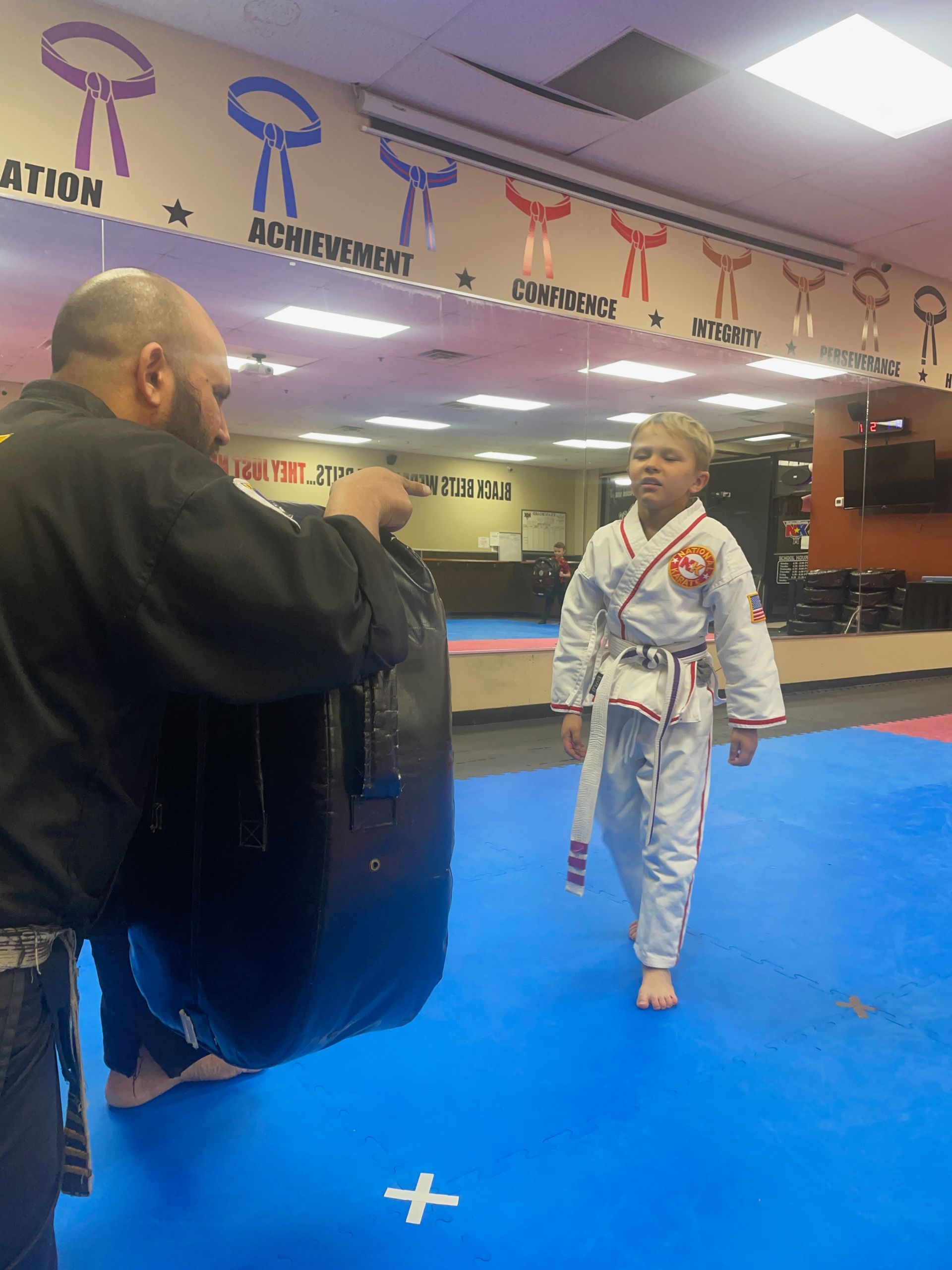
In our Youth Martial Arts in New Berlin classes, we make the middle part easier by turning effort into something your child can see. We use consistent class routines, skill check-ins, and a belt curriculum that breaks one big objective into smaller, realistic milestones. When kids can name what they are working on this week, they start thinking like goal-setters without even realizing it.
Research lines up with what we see on the floor. Studies on martial arts training show improvements in self-control, mindfulness, and emotional resilience in youth, which are the exact mental skills that make goal-setting possible. In other words, better goals are not just about planning. They are about regulation, attention, and follow-through.
Youth Karate uses a built-in goal system that kids understand
A belt system is not just tradition. It is a goal framework that is naturally kid-friendly because it is concrete. Your child can point to the next belt level and say, “That is what I am working toward.” More importantly, our instructors can point to the exact skills that lead there.
The belt path teaches short-term and long-term goals at the same time
We like to explain it this way: the next belt is the long-term goal, but class-by-class skill targets are the short-term goals. Kids learn to live in both worlds. That is a life skill.
A student might set a short-term goal like improving chamber position on a front kick, then connect it to a longer-term outcome like earning a stripe or preparing for a belt test. Over time, kids stop expecting instant results, and that mindset shows up in schoolwork too. Homework becomes “I can improve this in steps,” not “I am just bad at this.”
Milestones are measurable, which reduces frustration
In many youth activities, improvement can feel vague. With Youth Karate, milestones are specific: stance, guard, focus, balance, technique names, respectful behavior, and consistency. When your child has a tough week, we can still point to what improved and what to practice next. That clarity helps kids bounce back faster, which is one reason martial arts is associated with better emotional resilience.
The habits we build in class that support goal-setting at home
Goal-setting is not only about choosing a target. It is also about building the daily habits that make a target realistic. Our classes are designed to teach those habits through repetition, feedback, and routine.
Here are a few “quiet skills” we see develop in Youth Karate in New Berlin, often before parents expect it:
• Follow-through under gentle pressure, like holding a stance a little longer or repeating a drill one more time with good form
• Attention control, where kids learn to listen for details and apply corrections without shutting down
• Positive self-talk, because we coach effort and process, not just outcomes
• Respectful persistence, meaning kids learn to try again without getting disrespectful, dramatic, or defeated
• Calm recovery, where frustration happens but does not take over the whole class
None of that is accidental. We train it the same way we train technique: consistently, with clear expectations and supportive coaching.
Goal-setting works best when kids feel safe, supported, and challenged
Parents in New Berlin often ask if karate is safe, and that is a fair question. We take safety seriously, and we also understand that many families prefer non-contact or controlled-contact training, especially for kids who are still learning spatial awareness and emotional regulation.
Our youth classes prioritize fundamentals, control, and supervision. Most injuries in martial arts happen in competitive settings, not in structured classes with clear rules and instructor oversight. Our goal is to build confidence without turning class into chaos. When kids feel physically safe, they are more willing to take healthy risks like trying a new skill, speaking up, or leading a drill.
That safety also supports mental health. A peer-reviewed meta-analysis found that after 12 weeks of martial arts training, youth showed measurable fitness gains and reduced anxiety symptoms, with a moderate effect size. We cannot promise specific medical outcomes, of course, but we can say this: consistent training, good coaching, and a positive environment often change the tone of a child’s week in a very real way.
What goal-setting looks like across a typical 12-week stretch
We like using a 90-day lens because kids can actually feel that timeline. It is long enough to build momentum and short enough to stay motivating. Within about 12 weeks of consistent training, research shows improvements like increased VO2max, lower systolic blood pressure, and reduced anxiety. In our experience, the behavioral changes can be just as noticeable.
Here is how goal-setting usually develops over a 12-week cycle in our Youth Karate program:
1. Weeks 1 to 2: Your child learns the routine, basic stances, and how to listen for coaching cues
2. Weeks 3 to 5: Skills start to “click,” and your child can name specific goals like “stronger guard” or “faster snap on my kick”
3. Weeks 6 to 8: Confidence becomes steadier, and we often see better self-control when a drill is challenging
4. Weeks 9 to 10: Your child starts self-correcting, which is a big deal for school and home routines
5. Weeks 11 to 12: Goals feel personal, not assigned, and kids can reflect on progress with less prompting
That reflection piece matters. Goal-setting is not just setting goals. It is reviewing them, adjusting them, and staying engaged.
How Youth Karate supports better behavior without turning it into punishment
A lot of parents are really asking, “Will this help with impulsive behavior, attitude, or bullying issues?” We keep our answer grounded: Youth Karate builds self-control, and self-control is one of the strongest predictors of better decision-making in social settings.
Research also suggests children in martial arts show lower tendencies toward bullying behaviors and improved self-control in school. That fits what we work on every day: respect, discipline, and boundaries, taught in a way kids can absorb. We do not use humiliation or harshness. We use clear standards and consistent coaching.
When kids learn to control their body, they usually get better at controlling their reactions. It does not make them perfect. Kids are still kids. But it gives them tools: pause, breathe, reset, try again.
Why the “individual progression” model helps kids who struggle in team sports
Team sports can be great, but they are not always a clean fit for every child. Sometimes playing time is limited, skill growth feels uneven, or a child connects their self-worth to the scoreboard. Youth Karate gives kids a different kind of feedback loop.
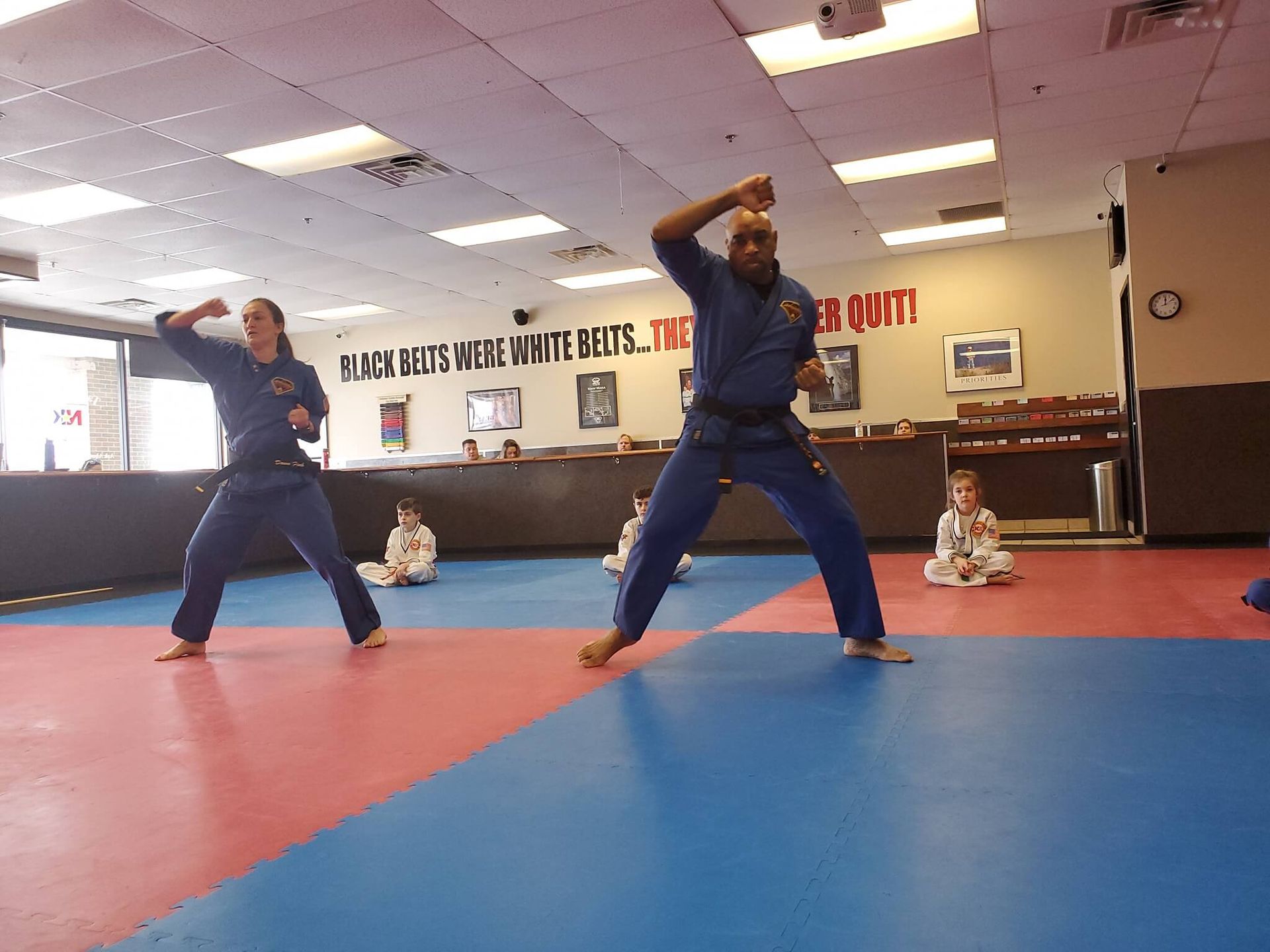
In our Youth Martial Arts in New Berlin program, progress is personal. Your child does not have to wait for a coach to notice them or for a game to go their way. If your child practices and improves, that improvement shows up in class, and it is recognized.
That also helps kids who are naturally cautious. Karate lets kids build bravery through controlled challenges. A new drill might feel intimidating at first, but it becomes manageable through repetition. Over time, kids learn a powerful lesson: confidence is built, not gifted.
How we help parents reinforce goal-setting at home
The best results happen when karate goals and home goals support each other. We keep this simple for families. You do not need to run a second dojo in your living room.
We recommend three easy ways to reinforce the goal-setting habits your child is building in Youth Karate:
• Ask what the “one focus” was in class today, not just “How was class”
• Help your child pick a small weekly practice target, like 20 good front kicks with balance
• Celebrate effort and consistency, especially when the goal is boring but important
If you want something more concrete, use the belt system as a shared language. Your child already understands it. You can say, “What is one thing you can do this week that moves you toward your next step?” That question is simple, but it trains a goal-setting brain.
Youth Karate in New Berlin and the bigger picture for busy families
We know schedules are tight. Between school, homework, and everything else, it is reasonable to ask whether adding karate will feel like one more thing.
Our approach is to make training a stabilizing routine, not a stressor. The class schedule is consistent, expectations are clear, and kids know what “success” looks like each day. That predictability is one reason karate often helps kids who feel scattered or overwhelmed.
Youth participation in organized sports has been climbing again nationally, reaching its highest level since 2015 for kids ages 6 to 12. That trend tells us families still value structured activities. The question is which activity builds skills that last. Youth Karate is one of the few that teaches goal-setting directly through a progression system kids can understand.
Take the Next Step
If you want an after-school activity that teaches your child how to set a goal, stick with it, and handle setbacks with more maturity, our Youth Karate program is built for exactly that. The belt path gives kids a roadmap, and our coaching makes the process feel achievable week after week.
We designed our youth curriculum at Wisconsin National Karate Kickboxing & Krav Maga to develop strong technique and strong character at the same time, so your child is not only learning martial arts, but also practicing the everyday habits that make goals real.
Take your first step toward becoming stronger, healthier, and more confident at Wisconsin National Karate Kickboxing & Krav Maga.